
Drywall, also called gypsum board or sheetrock, is the standard material used to create smooth interior walls and ceilings. A proper drywall installation makes the difference between walls that look flat and solid for decades and walls that crack, sag, or show seams within a few years. This guide explains how drywall is installed and how to choose the best drywall for your space.
What Is Drywall Made Of?
Drywall consists of a gypsum core pressed between two layers of paper. The gypsum provides fire resistance and rigidity, while the paper creates a smooth surface ready for paint or texture. Different drywall types are designed for specific conditions, such as moisture resistance, fire resistance, or sound control.
Choosing the Right Boards
Not all drywall is created equal. The "best" type depends entirely on where you are putting it. Here is a straightforward guide on how to choose your materials and get the job done without losing your mind.
Professional Drywall Tools
Before you start, make sure you have these basics on hand:
How Drywall Is Installed?
Installing drywall is one of those tasks that looks easy on television but requires a bit of finesse to get right. If you are tackling a renovation or finishing a basement, the goal is a seamless surface that looks like a single, solid piece of stone once the paint hits the wall. Drywall installation is a multi-step process that requires accuracy and planning. Rushing any step usually shows in the finished result.
Here is a straightforward guide on how to choose your materials and get the job done without losing your mind.
1. Measure and Plan the Layout
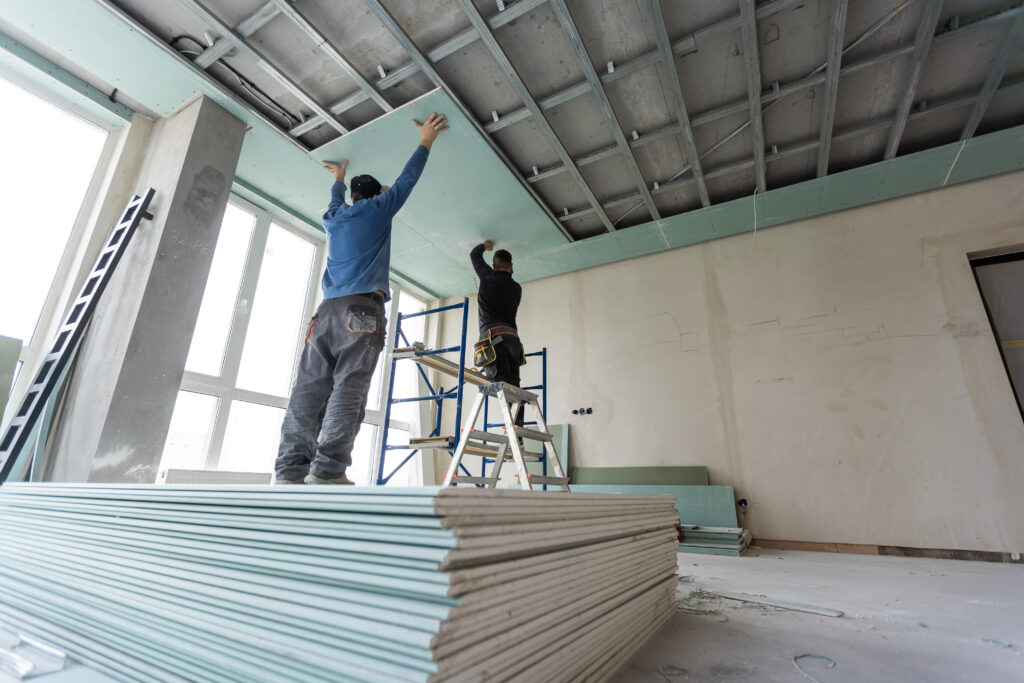
Before hanging any boards, the room is measured to minimize waste and reduce seams. Drywall is installed horizontally on walls whenever possible because it creates fewer joints and stronger walls. Ceiling drywall is always installed first so wall panels can help support the edges.
Electrical boxes, windows, doors, and plumbing penetrations are carefully measured and marked before cutting.
2. Cut the Drywall Panels
Drywall is scored with a utility knife along a straightedge, snapped cleanly, and the backing paper is cut from the opposite side. Openings for outlets and fixtures are cut using a drywall saw or rotary tool. Clean, accurate cuts help panels sit tight against framing and reduce finishing work later.
3. Hang the Drywallx
Panels are fastened to wall studs or ceiling joists using drywall screws. Screws are driven just below the surface without tearing the paper. Proper screw spacing is critical. Too few screws lead to movement and cracks, while overdriving screws weakens the board.
Ceiling panels are supported with lifts or multiple installers to keep them flat and tight to theframing.
4. Tape and Mud the Seams
Once all panels are hung, joints are taped using paper or fiberglass mesh tape. Joint compound is applied in multiple layers, also called coats. Each coat is wider than the last to feather the seam smoothly into the wall surface.
Inside corners, outside corners, and fastener heads all receive compound and careful shaping.
5. Sand and Finish
After the compound dries, the surface is sanded smooth. This step determines how the wall will look once painted. Dust control and proper lighting are important to avoid visible imperfections. After sanding, the drywall is ready for primer and paint.